
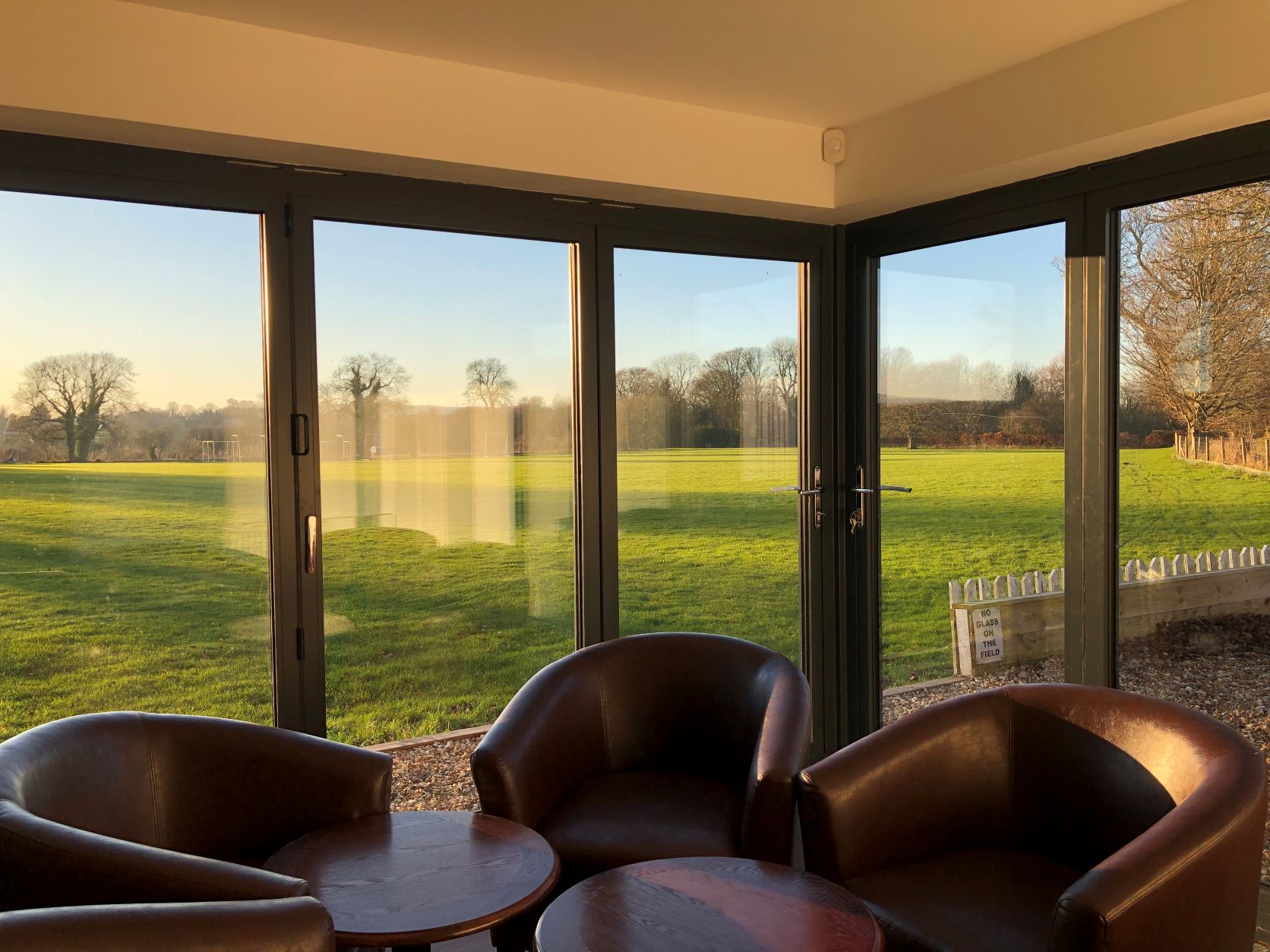
A Foundation of Community: The Avebury Sports and Social Club’s Origins
The Avebury Sports and Social Club represents a central pillar of the village’s modern social fabric, with a history rooted in the early 20th century. Established in the 1930s, the club was created as a “friendly society” for agricultural workers in Avebury and the surrounding area. This founding purpose is indicative of the village’s economic and social landscape at the time, where the community’s rhythm was largely dictated by the agrarian cycle. The club provided a dedicated space for recreation and social interaction for this essential local workforce, offering a respite from the physical demands of agricultural labor.

The continued existence of the club for nearly a century speaks to its success ..
.. adapting to the changing social and economic currents of rural England. Its initial design as a hub for a specific demographic has since broadened, but its fundamental purpose—to serve and support the local community—has remained constant.
The club’s resilience demonstrates how a foundational community institution, once a reflection of a dominant agrarian economy, can evolve to maintain its relevance by providing a space for a diverse, modern population. It has transitioned from a venue primarily for workers to a multi-purpose community resource, a vital “third place” where local life unfolds, distinct from the ancient monuments that draw a global audience.
The Marmalade Heir and the Sportsfield: Alexander Keiller’s Enduring Legacy
The history of the Avebury Sports and Social Club is uniquely and inextricably linked to the work of Alexander Keiller, a Scottish antiquarian and archaeologist whose name is synonymous with the modern restoration of the Avebury henge. Keiller, who inherited a fortune from his family’s famous marmalade business, was a passionate and flamboyant figure. In the 1930s, inspired by earlier archaeologists and his own fascination with prehistoric landscapes, he purchased significant portions of the Avebury estate at his own expense. His subsequent work involved the excavation of buried stones, the re-erection of megaliths, and the establishment of a museum, profoundly shaping the physical and historical landscape of Avebury as it is known today.
A crucial, yet often overlooked, dimension of Keiller’s legacy is his direct and lasting influence on the village’s social infrastructure.
The Avebury Sports and Social Club did not emerge in a vacuum; its origins are rooted in the workforce employed by Keiller to carry out his extensive archaeological excavations. He did not merely hire these men for their labor; he integrated himself into the community, living at Avebury Manor and actively supporting local life. A tangible representation of this commitment is the sports pavilion, a structure that continues to stand albeit a newly acquired one) on the sports field today. Around 1936 or 1937, a pavilion was acquired from the Bristol area by a builder friend of Keiller’s. It was then transported, erected, and painted by Keiller’s own men. This single event illustrates a profound connection: the same hands that were tasked with restoring the ancient stones were also responsible for building the social infrastructure that would serve the community for generations. The club’s existence and physical presence are thus a direct, causal ripple effect of a grand archaeological project, demonstrating how the preservation of historical artifacts can lead to the creation of new social history.

A Tale of Two Sports: The Intertwined Histories of Cricket and Football
The Avebury Sports and Social Club has long served as the home for multiple sporting activities, with cricket and football sharing a central place on the village sports field. Their histories, though intertwined, reflect different periods of triumph, decline, and resurgence.
Cricket has been played on the Avebury sports field since shortly after the First World War.
The Avebury Cricket Club: From Post-War Resurgence to League Success
The initial players were closely linked to Alexander Keiller’s workforce, with his head gardener, Mr. Ben Windsor, given the responsibility of maintaining the cricket square. Following the Second World War, the cricket and football clubs combined to form the Avebury Sports Club, with key local figures like Vernon Blake serving as secretary.

The modern Avebury Cricket Club, however, was re-formed in the late 1980s, marking a period of renewed focus and growth. This re-establishment proved highly successful. The club joined the Wiltshire League in 2002 and quickly rose through the divisions, winning Division 5 in its first year and Division 4 the following year. The club has since competed in Divisions 1 and 2, solidifying its status as a “thriving” local sports entity with a growing junior section. The club’s evolution from its origins in an archaeological workforce to a modern, competitive league team illustrates a story of institutional renewal and long-term vitality.
The Avebury Football Club: Triumphs, Decline, and a Youthful Resurrection
The Avebury Football Club’s history is a story of a golden era followed by a gradual decline, with its legacy carried on by a new generation. The club was a founder member of the Wiltshire County League and completed 16 seasons from 1976-77 to 1991-92. Its playing surface, located next to the famous stones, was noted as one of the best in the league.
The club’s most successful period was in the early 1980s. In the 1981-82 season, it won the prestigious Wiltshire Senior Cup and finished as Division 1 Runners-up. The following season saw another cup victory, with the club lifting the Ghia Senior Knockout Cup while once again finishing as Division 1 Runners-up. A timeline of the club’s league performance is detailed below:
| Season | League/Cup Achievement | Final Position | Name Change |
| 1978-79 | Subsidiary Cup Runners-up | 3rd place (promoted) | N/A |
| 1981-82 | Wiltshire Senior Cup Winners | Division 1 Runners-up | N/A |
| 1982-83 | Ghia Senior Cup Winners | Division 1 Runners-up | N/A |
| 1984-85 | N/A | Relegated to Division 2 | N/A |
| 1987-88 | N/A | 4th place (highest position at this level) | N/A |
| 1991-92 | N/A | 4th place | Plessey Avebury |
| 1992-93 | N/A | Record Expunged | Avebury Park |
| 2003-04 | N/A | N/A | N/A (Youth setup resurrected) |
Following its successful period, the club’s performance declined, culminating in relegation in 1984-85. It underwent two name changes in its final seasons—to Plessey Avebury in 1991-92 and Avebury Park in 1992-93. The adult club eventually folded after its affiliation was withdrawn by the Wiltshire County Football Association in 1993. Despite the end of the adult team, football in Avebury was resurrected in 2003-04 with the establishment of a youth setup at the same sports ground, ensuring the continuation of the sport for future generations. The resilience of the Avebury Sports and Social Club as an institution is evident in its ability to endure the successes and failures of its teams, proving that its core purpose as a community hub transcends the specific fortunes of any single sport.

The Clubhouse: A Modern-Day Community Cornerstone

Today, the Avebury Sports and Social Club operates under the name “The Clubhouse at Avebury” and continues to fulfill its original mission of serving the local community, albeit with a modern, diversified set of offerings. The facility is home to the Unhenged Café, which serves coffee, cakes, and light lunches from Thursday to Sunday. This addition provides a new point of access for both locals and tourists, while maintaining a clear local identity through its name, a play on the famous stone circle.
New Name for a New Time
Same Community, Same Club
The club remains the official home of the Avebury Cricket Club and also hosts local darts and skittles teams. It maintains its long-standing responsibility of looking after the Avebury Sportsfield on behalf of the village, a role that ensures the continuity of cricket in the summer and junior football in the winter. Membership is offered at an annual rate of £10 and provides benefits such as reduced rates for private hire and discounts at the Unhenged Café.
In addition to its role as a home for sporting teams, the club is available for private hire for a variety of functions, from parties and business meetings to wakes, demonstrating its versatility as a modern community venue. This adaptability, from a “friendly society” for agricultural workers to a multi-use facility, illustrates the institution’s capacity to maintain its foundational purpose—providing a space for social connection—in an ever-changing environment. It continues to be a crucial hub for genuine local interaction, standing apart from the heavily touristed areas of the historic village.
The Avebury Sports and Social Club vs. The Avebury Social Centre
It is important to distinguish the Avebury Sports and Social Club from the Avebury Social Centre, as both are community venues in the village but possess separate histories and functions. The Avebury Sports and Social Club is located at the Avebury Sportsfield and is the hub for local sporting activities.
In contrast, the Avebury Social Centre, located on High Street, has a different origin. It was formerly the village school and changed its role in 1973 when a new school was built to accommodate a growing class size. The Social Centre now functions as the social heart of the area in a different capacity, managed by a committee of voluntary trustees. It hosts a range of events, including the annual pantomime, parish council meetings, and gatherings from visiting groups. While both venues are critical to Avebury’s community life, they are distinct entities with separate histories and operational focuses.
The Enduring Heart of a Village
The history of the Avebury Sports and Social Club is far more than a simple timeline of a local institution; it is a microcosm of the village’s modern evolution. From its establishment as a “friendly society” for agricultural workers in the 1930s, the club has served as a constant anchor for community life. Its unique origin, tied directly to the archaeological preservation work of Alexander Keiller, places it in a rare category of historical artifacts. The replacement pavilion and the enduring legacy of Avebury’s early sports teams serve as a living testament to Keiller’s vision. He didn’t just restore ancient monuments; he built a foundation for modern community life to flourish alongside them.
The club has proven its institutional resilience by enduring the changing fortunes of its associated sports teams. It provided the framework for the football club’s golden era and, following its folding, has continued to support the thriving cricket club and a resurrected junior football program. In its modern form as “The Clubhouse at Avebury,” with a café and private hire options, it has adapted to new economic and social realities without compromising its foundational purpose of fostering community connection. In a landscape defined by ancient stones and prehistoric monuments, the Avebury Sports and Social Club stands as a monument of social history, a testament to the enduring power of community and a living legacy of a village’s past.